
Lighting in Interior Design and Architecture: Why It Matters More Than It Seems
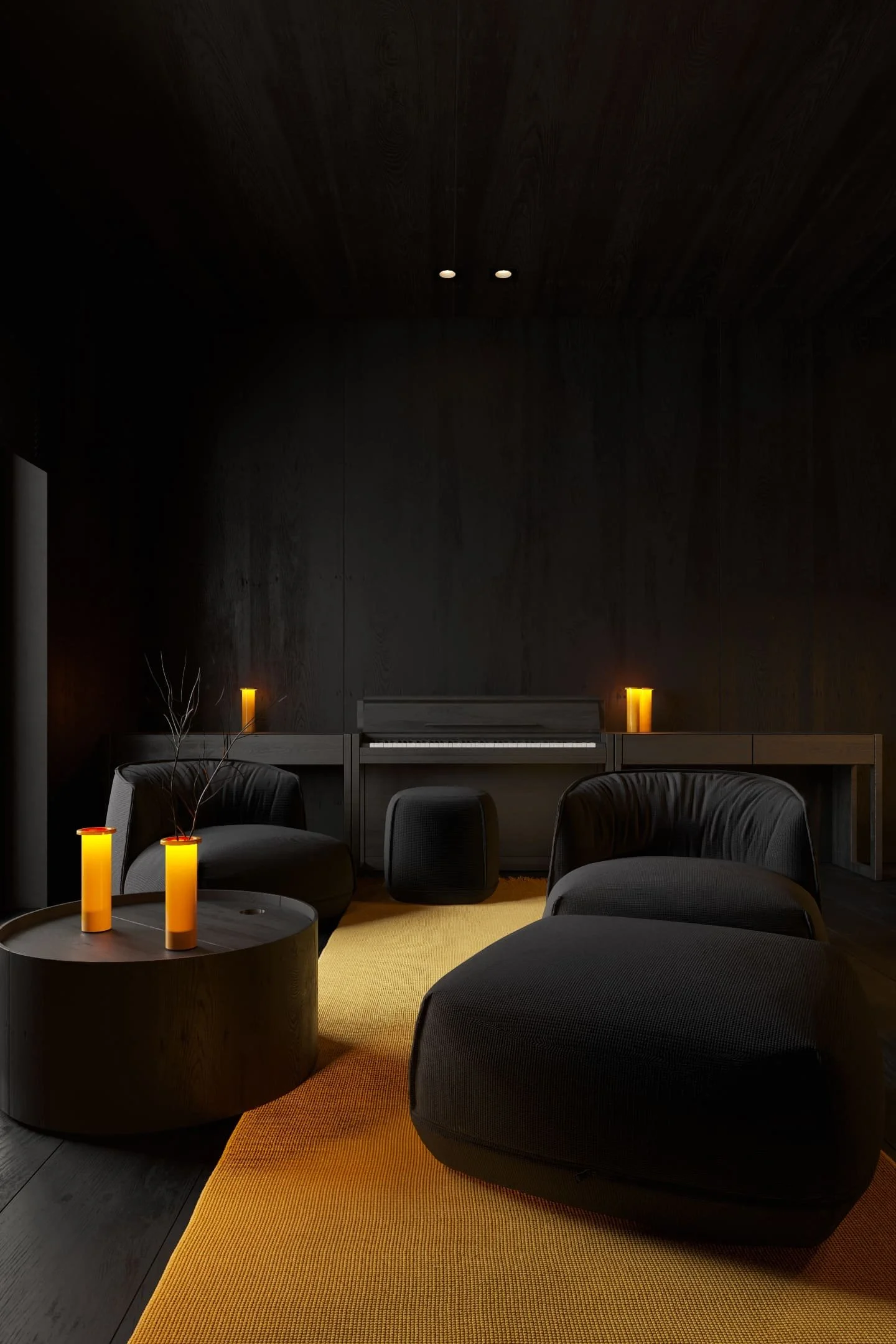
Today I want to talk about light. For me, lighting is one of the most important and personal parts of any project — whether it is interior design, private house architecture, an apartment, a restaurant, or a commercial space.
Light is not just a technical element. It shapes volume, creates shadows, highlights materials, and can completely change the way we perceive a space. With lighting, you can make architecture feel stronger, emphasize certain details, or hide what should not attract attention.
And the most interesting part is that it does not always require a huge budget.
Of course, in professional lighting design, the quality of the light source matters. Color accuracy, color temperature, light range, color rendering, and the design of the fixtures themselves all play an important role. But even with a limited budget, you can use Philips Hue, Xiaomi, or similar smart lighting systems to create different lighting scenarios and change the mood of an interior.
When I start any interior or architectural project, I first think about layers of light. Not about one chandelier in the center of the room. Not about one general light source. I think about a system: general lighting, accent lighting, background lighting, decorative lighting, night lighting, and working light.
The more carefully these layers are designed, the more alive the space becomes.
In residential interior design, most people have similar basic needs, but different habits. Some people like to work in bright light. Others prefer a darker room with soft light somewhere in the background. Someone needs the entire office to be filled with light, while someone else only needs a small desk lamp that can be switched on when necessary.
That is why lighting in an interior should not be one-dimensional. It has to work through scenarios.
A very clear example is a restaurant. Sometimes you enter a restaurant where the materials are expensive, the furniture is beautiful, the kitchen is good, and everything seems to be done properly — but something still feels wrong. Very often, the problem is the lighting.
Many restaurants are located in spaces with small windows or almost no natural light. And natural light is still the main reference point for how we perceive color, materials, skin tones, food, and atmosphere. A space filled with daylight almost always looks more natural and more beautiful.
But a restaurant cannot depend only on the sun. It often works in the evening, and sometimes the building itself does not allow much daylight inside. That is why artificial lighting has to be designed very carefully.
In a restaurant, light should not fill the entire room evenly. This is a common mistake. When everything is lit in the same way, the space starts to feel like a banquet hall, a 90s wedding restaurant, or a photo studio. The atmosphere disappears. The intimacy disappears. People no longer feel that they have their own space.
Focused beams of light work much better: above the tables, above the bar, near the entrance, close to the wardrobe, along the circulation routes, and around important zones. Light should guide people through the interior, but it should not reveal everything at once.
Dark areas are not a problem. Sometimes they are exactly what makes an interior feel deeper, calmer, and more expensive.
When a person comes to a restaurant, they usually want a sense of privacy. They want to spend an evening with their friends, with someone close, or simply have dinner alone and relax. If the entire room is evenly lit, it feels as if everyone around is sitting together with you. That destroys the atmosphere.
The same principle works in residential interiors, but here it becomes even more important to design different lighting scenarios. One type of light is needed for a romantic dinner. Another for watching a film. Another for a quiet evening at home. Another for work. Another for preparing for sleep. And there should also be soft night lighting, so you can walk to the kitchen or bathroom without turning on a harsh general light.
All these scenarios can be integrated into a smart home system. In theory, it may sound complicated, but in reality it can be very simple when planned properly. Different lighting groups can be controlled with one or two switches, through an app, or by voice. The important thing is to think about it during the design stage, not after the renovation is finished.
For a home, I usually prefer warm light in the range of 2700–3000K. It feels softer, calmer, and more suitable for residential spaces.
To understand the scale, around 1700K is close to the warm glow of a candle or fire. The higher the Kelvin value, the cooler and bluer the light becomes. Daylight is often around 5600K.
Cool light is more suitable for offices, hospitals, technical rooms, and workspaces. It creates a more focused, active, and sometimes slightly tense atmosphere. In a home, however, overly cool light often kills the feeling of comfort.
At the same time, modern lighting gives us much more freedom. You can use lamps that work in both warm and cool ranges. Or you can use RGB lighting, where the interior can become green, blue, red, or any other color — not as a permanent solution, but as an additional mood scenario.
Another interesting option is connecting lighting with a home cinema setup. For example, Philips Hue systems can synchronize the room lighting with the image on the screen. If one side of the frame turns blue, the lighting in the room can react to it. This makes the film experience more immersive and atmospheric.
But the most important thing in lighting is not the technology. The most important thing is understanding why the light is there.
Good interior lighting should not simply “make the room bright.” It should create mood, support the architecture, enhance materials, and give a person comfort and control over the space.
That is why lighting in architecture and interior design should be planned as carefully as layout, materials, furniture, and form. Sometimes lighting is exactly what turns a good interior into a truly strong project.
