
Why It Is Impossible to Determine the Cost of an Interior or House in Advance
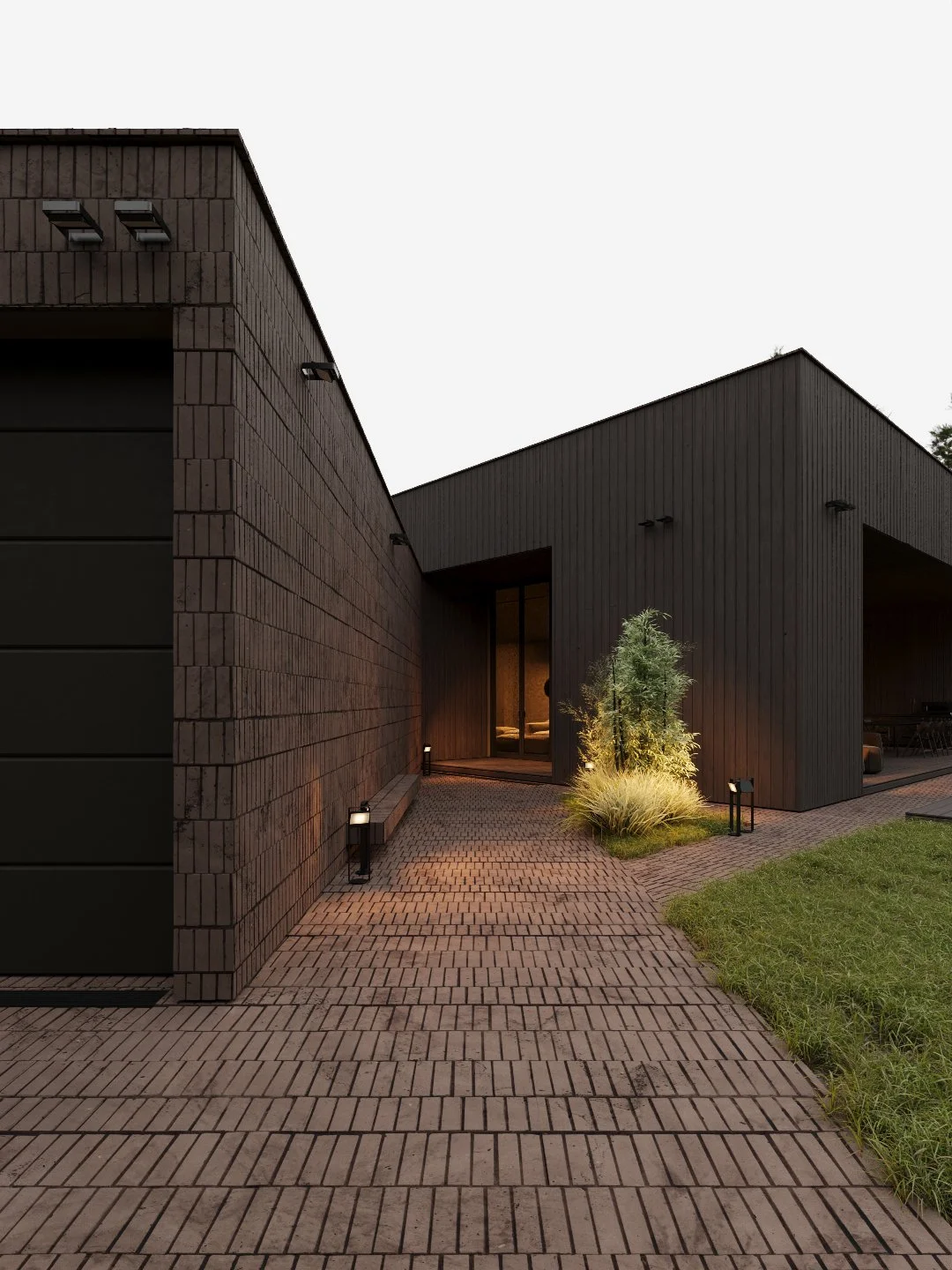
One of the first questions clients ask when starting a new project is surprisingly simple: “How much will the interior cost?” or “How much will it cost to build the house?”
At first glance, the answer seems straightforward. Many companies offer fixed-price packages and promise a fully completed interior or house for a predetermined budget. In reality, however, things are rarely that simple.
After many years of working in architecture and interior design, I have learned that the cost of a project is not determined by its square footage or by beautiful images. It is determined by hundreds of decisions that are made throughout the design and construction process.
This is precisely why two interiors that look almost identical can differ dramatically in cost. The same applies to houses.
From a distance, two white kitchens may appear virtually identical. Yet one may be built using standard materials and basic hardware, while the other is crafted from natural wood veneers, premium finishes, advanced mechanisms, and custom-made components.
On a rendering, they may look similar. In reality, they belong to completely different categories of budget and quality.
The same principle applies to almost every element of a modern home.
A good example is home automation.
Today, it is possible to create a functional smart home using Wi-Fi devices, smart plugs, and consumer-grade products. Many appliances already support remote control through mobile applications, and for smaller apartments this can be a practical solution.
Professional projects, however, often require a different approach.
In our work, we frequently integrate advanced automation systems during the construction phase. These systems allow lighting, climate control, shading, security, audio, and other engineering components to function as one coordinated environment.
With a single command, a home can switch into movie mode, evening mode, entertainment mode, or nighttime mode. Lighting levels adjust automatically, climate settings change, and multiple systems work together to create a seamless experience.
The cost of these solutions can vary significantly depending on the technology, manufacturer, level of integration, and long-term reliability.
Personally, I rarely recommend relying entirely on wireless systems in large residences. Experience shows that as the number of devices increases, wireless solutions become more dependent on network stability and infrastructure quality. For larger homes, professionally designed wired systems often provide greater reliability and longevity.
Home automation, however, is only one example. The same logic applies to engineering systems.
In our projects, we pay significant attention to ventilation, air conditioning, water filtration, security systems, and environmental comfort. These elements are largely invisible in photographs, yet they play a critical role in everyday life.
A beautiful interior cannot compensate for poor air quality, inadequate climate control, or uncomfortable living conditions. This is why successful projects begin with engineering and planning rather than furniture selection or decorative finishes.
Materials provide another example.
Two wooden floors may appear identical in photographs while differing substantially in price due to species, grading, manufacturing quality, finishes, and installation methods.
Microcement systems can range from relatively affordable solutions to highly specialized premium applications.
Tiles may look similar in renderings while offering completely different levels of durability, precision, texture, and craftsmanship.
Architecture itself follows the same pattern.
Many people assume that a minimalist building should automatically be less expensive to construct. In reality, minimalist architecture often demands greater precision, higher-quality materials, and more sophisticated construction methods.
Simple forms are frequently the most difficult to execute well.
Behind a restrained architectural language may be complex structural solutions, premium façade systems, custom detailing, and demanding construction tolerances.
From fifty meters away, two houses may appear almost identical.
One may be finished with architectural concrete, natural stone, or large-format porcelain cladding, while the other relies on significantly more economical materials. The visual impression may be similar. The cost is not.
Multimedia systems provide another interesting example.
In many of my projects, I prefer using projectors instead of televisions, or combining both solutions depending on the space and the client’s lifestyle. A well-designed projection system creates a more immersive and cinematic experience. Larger image sizes, a more natural viewing environment, and a closer connection to how films were originally intended to be experienced can significantly enhance everyday living.
Yet even here, costs can vary dramatically. Two home cinema systems may appear similar from the outside. However, projector technology, optical quality, brightness levels, screen materials, acoustic treatment, and audio equipment can produce entirely different experiences.
The same applies to sound systems. Many ceiling and wall speakers look nearly identical once installed. What remains hidden behind the grille often determines the true performance, reliability, and value of the system. This is why it is impossible to evaluate an interior solely through images.
Throughout my career, I have noticed an interesting pattern.
People rarely regret investing in quality. Far more often, they regret compromising on critical decisions that become difficult or impossible to change after construction is complete.
This is particularly true for engineering systems, climate control, automation, infrastructure, and other components that remain hidden behind walls and ceilings.
A successful project should therefore never be based solely on visual references. It should be supported by detailed specifications, technical documentation, and a comprehensive budget breakdown. Clients should understand exactly what is included, what alternatives exist, and how each decision affects both performance and cost.
This approach allows budgets to be managed intelligently rather than emotionally.
For this reason, I believe the question should not be: “How much does an interior cost?” or “How much does it cost to build a house?”
A more meaningful question would be: “What kind of home do I want to create, and which decisions truly matter for the way I live?”
Only then can the budget become a meaningful reflection of the home itself.
And only then does cost stop being just a number and start becoming an investment in quality of life for many years to come.
